Microstructure Mechanical Properties And Hydrogen Diffusion Analysis Of Titanium Alloys
Time:2023-08-02
View:473
Microstructure Mechanical Properties And Hydrogen Diffusion Analysis Of Titanium Alloys
Analyzing the microstructure, mechanical properties, and hydrogen diffusion behavior of titanium alloys is essential for understanding their performance in various applications, particularly in industries such as aerospace, biomedical, and automotive. Here's a general overview of these aspects:
Microstructure:
The microstructure of a material refers to its internal structure at the microscopic level, including grain size, phase distribution, and defects. In titanium alloys, the microstructure is influenced by factors such as alloy composition, cooling rate during processing, and heat treatment.
Common microstructural features in titanium alloys include:
1. Alpha phase: Hexagonal close-packed (HCP) structure with excellent strength and ductility.
2. Beta phase: Body-centered cubic (BCC) structure, providing high strength but lower ductility compared to alpha phase.
3. Alpha-beta phase: A combination of both alpha and beta phases, which can be tailored to achieve a balance between strength and ductility.
Mechanical Properties:
The mechanical properties of titanium alloys depend on their microstructure and alloying elements. Key mechanical properties include:
1. Strength: The ability to resist deformation and bear loads without failure.
2. Ductility: The ability to deform plastically without breaking.
3. Toughness: The ability to absorb energy before fracture.
4. Hardness: Resistance to indentation or scratching.
5. Fatigue resistance: The ability to withstand repeated loading without failure.
6. Creep resistance: The ability to resist deformation under long-term, high-temperature loading.
Hydrogen Diffusion:
Hydrogen can be absorbed by titanium alloys through various sources such as exposure to hydrogen-containing environments, hydrogen charging during processing, or hydrogen generation through corrosion. The presence of hydrogen can significantly affect the mechanical properties of titanium alloys, leading to hydrogen embrittlement, reduced ductility, and lower fatigue strength.
Analyzing hydrogen diffusion involves studying how hydrogen atoms diffuse through the microstructure of the material, as well as identifying factors influencing diffusion, such as temperature, pressure, and the presence of defects or grain boundaries.
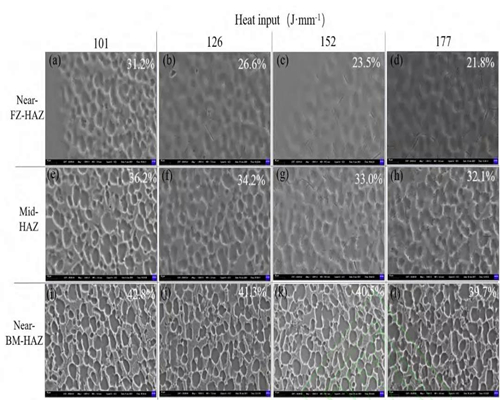
Techniques for Analysis:
Various analytical techniques are used to study these aspects:
1. Microscopy: Scanning Electron Microscopy (SEM) and Transmission Electron Microscopy (TEM) can provide high-resolution images of the microstructure.
2. X-ray diffraction: Used to determine the phase composition and identify crystallographic phases in the material.
3. Mechanical testing: Tensile, compression, hardness, and fatigue testing to evaluate mechanical properties.
4. Hydrogen permeation testing: To study the diffusion behavior of hydrogen in the material.
5. Computational modeling: Molecular dynamics simulations and other computational methods can aid in understanding hydrogen diffusion and mechanical behavior at the atomic level.
Overall, a comprehensive study of the microstructure, mechanical properties, and hydrogen diffusion behavior of titanium alloys is crucial for optimizing their performance and ensuring their safe and reliable use in various applications.


